Have any question?
Call (403) 210-2927

Call (403) 210-2927


Navigating a cyber insurance policy renewal used to involve answering a few straightforward questions about your basic antivirus software. Today, insurance underwriters require detailed evidence of comprehensive security controls before they will even consider approving your coverage.

When your technology isn’t pulling its weight, your team ends up working twice as hard just to maintain normal output. We all recognize the obvious disruptions, but the quiet, constant tech delays hiding inside your daily routine often inflict far greater damage on your business.
Let’s review some of these delays… and how we can help you resolve them.
A sudden technology failure can halt your daily operations without warning. When a central network appliance drops its connection, or an employee workstation stops responding, your entire business experiences an immediate slowdown. Orders cannot be filled, invoices cannot be issued, and client inquiries remain unanswered. For a small business, these unexpected halts do not just create temporary frustration. They stall your financial growth and force your management team into an expensive, stressful scramble to restore basic connectivity.
If you are a business owner, you probably manage hundreds of different online accounts. Yet, tech experts like me expect you to have a completely unique, random password for every single one!
It is a lot to handle. It is also a rule that every single person on your team needs to follow to keep your business safe. A password manager, which is software that stores your logins securely, is the easiest way to manage this requirement.
As a business owner, you probably manage hundreds of different digital assets, vendor relationships, and daily operational fires. Yet data security standards require you to navigate a complex matrix of cybersecurity rules just to let a customer swipe their card. If your business accepts Visa, Mastercard, American Express, or any other major credit card, you have likely run into a frustrating acronym: PCI DSS. It stands for Payment Card Industry Data Security Standard.
Let's look at this standard through the lens of a business owner and see why it actually matters.

“Our systems are running okay right now. Let’s just wait and see how things go before we invest in upgrading our IT.”
Whenever we see this sentiment echoed in the small business community, our technicians break out in a cold sweat. The wait-and-see approach might seem fiscally conservative and responsible, but in reality, it’s anything but. It’s not a strategy; it’s unhedged financial liability.

When we talk about IT security or business continuity, the conversation often gets lost in technical jargon like encryption layers or redundancy. For a business owner, these can often feel like abstract costs rather than strategic investments. Downtime, however, is one number that you don’t want to feel abstract, and it shouldn’t be treated as such. To justify your IT spending, you need to know how much revenue your business is leaving on the table due to technical issues.

Think of your digital security like your skincare routine or your gym habits: it is all about consistency over intensity. You don’t need a million-dollar setup to stay safe; you just need to stop leaving the metaphorical front door unlocked. Since the line between work life and real life is nonexistent these days, one weak password on a random app can give a hacker the keys to your entire company’s kingdom. You should spend the next seven days on this digital hygiene sprint because it is low-effort, high-reward, and honestly, you owe it to your future self.
If you ask ten different IT guys to define "the cloud,” you’ll probably get twelve different answers involving scalability, elasticity, and other buzzwords that don't actually help you run your business on a Wednesday morning.
Let's strip away the jargon. The cloud isn't some magical, invisible ether. It’s essentially just entrusting someone else—usually a massive corporation like Microsoft, Google, or Amazon—to manage the physical computer for you.
Instead of having a humming, heat-generating server box locked in your broom closet, you’re renting space on a much more powerful, much more secure server in a data center somewhere else.

In late February, data analytics company LexisNexis Legal & Professional suffered a data breach in which the threat actor responsible used an unpatched application to access the company’s Amazon Web Services infrastructure. While LexisNexis L&P claims the data leaked was minimal, this breach still serves as an important reminder of a critical security principle:
If a company as large as LexisNexis L&P can fall victim to such a simple vulnerability, what’s to say your business won’t?
Some businesses find it preferable to host their servers on-site, but they fail to ask themselves if the server is a reliable asset or a financial drain. For years, the argument was in favor of on-premise hardware due to control and a one-time purchase price. But the landscape has shifted since, and now business owners are prioritizing Total Cost of Ownership over control. Do you really know how much your physical servers are costing you, and do you think they are worth that price point?

The era of suggested AI transparency has officially ended. Nowadays, opening the hood of your digital operations isn't just a best practice—it is the law. The age of the black box is being dismantled by global regulators who are now forcing companies’ AI to show its work.
Ideally, a business owner should be able to focus entirely on growth and operations without worrying about digital threats. However, cybersecurity is a fundamental pillar of business continuity. Ignoring your network defenses doesn't just invite risk, it invites catastrophe.
Unless they run a technology company, business owners shouldn’t have to give much thought to their network protection. They have much more critical things to spend their focused time on. Unfortunately for them, cybersecurity is extremely important, so having an ongoing strategy to consistently upgrade your network defenses is something most businesses should consider. Today, we thought we’d go through six reasons you need to take network security seriously.
Imagine that your screen flashes a devastating message: your critical data is encrypted, and you face a massive ransom demand. Your operation grinds to a halt. This isn't just an enterprise problem; it's the harsh reality for businesses of all sizes.
Cyber threats don't discriminate. Your small or mid-sized business is a prime target.

Artificial intelligence, or AI, can be found in pretty much every facet of business these days, and CIOs are more tempted than ever to use innovative AI tools. There are plenty of reasons: they can increase efficiency and do the mundane things that need to be done, but are more expensive. AI is more than just for generative content; strategic implementation means implementing the right tools for your business and taking action in a calculated manner.
Today, we want to explore the dangers of rushed adoption and why it’s important to carefully consider your business’ use of AI. The consequences of not doing so can be dangerous, to say the least.

SMBs tend to pride themselves on how well they’re able to treat their customers. Larger enterprises sometimes lack the personalized attention that customers of small businesses get, despite having the tools to make it happen. Small businesses can also achieve this goal, and it’s all thanks to customer relationship management solutions. The right tool can improve sales, marketing efforts, and even customer satisfaction.

Today, IT tools and services are essential for businesses of any size. They provide the direction, stability, and connectivity needed to thrive in an increasingly digital landscape… but what exactly are these "IT tools and services," and why should they be a priority for your business, specifically?
Simply put, they encompass the hardware, software, and expertise that enable your business operations, from managing customer relationships and streamlining workflows to safeguarding critical data. Let’s talk a little more about why they need to be prioritized.
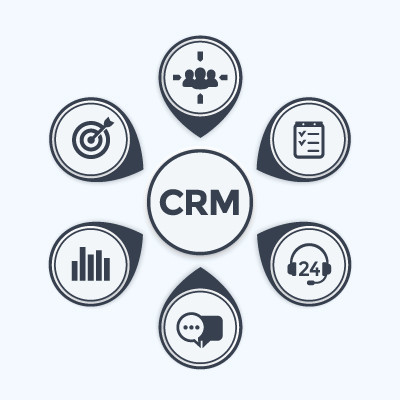
Having tools that help enhance your ability to support your customers is rarer than you may expect. One of the best tools a lot of businesses employ is Customer Relationship Management (CRM). The CRM system can transform how a business operates, but to make the most of it, you’ll need to employ some strategies.

News flash: just because you’re a smaller business doesn’t mean you’re a smaller target for cyberattacks. You’re not immune, and you can certainly fall prey to the unfortunate reality of the modern cyberthreat landscape. If anything, small businesses are the perfect target, and we’ll explain why.
Interested in seeing what we can do for your business? Contact us to see how we can help you!
Our network assessment will reveal hidden problems, security vulnerabilities, and other issues lurking on your network.
Learn more about what OnSite I.T. can do for your business.
OnSite I.T.
429 14th St. N.W. #104
Calgary, Alberta T2N 2A3